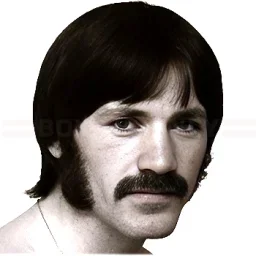
Charlie Nash
- Age: 74 yrs
- Nationality: Northern Ireland

- Born: 10th May 1951
- Place of birth: Derry, Northern Ireland, United Kingdom

- Residence: Derry, Northern Ireland, United Kingdom
- Division: Lightweight
- Height: 5ft 8"
- Stance: Southpaw
- Debut: 2nd Oct 1975
- Status: Retired Professional Boxer
-
Record:


Charlie Nash Boxing Statistics
Charlie Nash Biography
Charlie Nash, born in Derry on the 10th May 1951, was a left-handed lightweight with the rare knack of making a small city feel like the centre of the boxing world. He stood 5ft 8in, boxed from the southpaw stance, and finished his professional career in March 1983 with a record of 25 wins and 5 defeats, 9 of his victories inside the distance. The bare numbers don’t explain why his name still carries weight: he was an Olympian as an amateur, British champion as a professional, and European champion twice over, the sort of fighter who spent his best years achieving his dream, often at home in Derry, where the crowd knew him by first name.
His amateur schooling was done the hard way and in the right places. Nash boxed out of St Mary’s club in Londonderry, won provincial honours, lifted the Ulster senior title in 1969 and then the Irish national senior title in 1970. In Munich in 1972 he represented Ireland at lightweight and showed the temperament that would later serve him in championship rounds: after a first-round bye he outpointed Denmark’s Erik Madsen by a wide decision, stopped Mexico’s Antonio Gin inside a round, and then met Poland’s Jan Szczepański in the quarter-final, losing by third-round stoppage to the man who went on to take gold. His life outside the ropes carried its own gravity. Nash has spoken publicly about the family tragedy of Bloody Sunday, when his younger brother Willie was killed, and his father Alex wounded, a brutal interruption to a sporting life that already demanded plenty. It is part of his story, not as a talking point, but because it helps explain the steel behind the calm expression.
He turned professional later than the modern fashion, choosing the paid game at 25, and he went straight to work. On the 2nd of October 1975, he made his debut against Ray Ross for the Irish lightweight title at Derry’s Templemore Sports Complex and won on points, starting a pattern that would define his career: big nights in his own town, with titles at stake and no soft landings. Early on, he worked under manager Gerrt Hassett, then moved into the orbit of Jack Solomons, the London promoter whose name was already stamped across British boxing history. Solomons helped place Nash on the broader circuit while still bringing danger to Derry, and Nash responded by collecting wins through fitness and discipline as much as sparkle. He could box, but he was no sleepwalker. Even those who remember him as a “dancer” recall that it came with spite—dips and angles, then a sudden, whipping lead hand that snapped heads back. The first blemish came when cuts began to intrude: he suffered an early loss to Adolfo Osses when damage around the eye forced a stoppage, a reminder that sometimes a fight is lost not to skill, but to blood in the wrong place at the wrong time.
If Nash’s early professional years were about establishing himself, the next phase was about taking what was available and defending it properly. In February 1978, again at Templemore, he fought Londoner Johnny Claydon for the vacant British lightweight title and won by stoppage. This homecoming championship carried real meaning in a city that treated boxing as civic theatre. From there, the ambition moved beyond Britain. In June 1979, he outpointed France’s André Holyk over 12 rounds at Templemore to win the European lightweight title, and six months later, on the 6th, December 1979, he defended that belt in Denmark against the great Ken Buchanan at Brøndby Hallen on the outskirts of Copenhagen. It was a tight, serious fight—Buchanan, the seasoned former world champion, Nash, the hungry southpaw champion with his own crowd effectively replaced by a hostile neutrality—and Nash came through on a close unanimous decision, with two judges scoring it 118–116 and the referee-judge giving it 116–115. The setting mattered as much as the names: Nash, who had largely built his reputation at home, had shown he could travel and still do the job when the belt was on the table.
That victory brought him to the one fight every British Isles lightweight wanted in that era: a crack at Jim Watt. On the 14th, March 1980, at the Kelvin Hall in Glasgow, Nash challenged Watt for the WBC world lightweight title in a bout that had the feel of a proper old quarrel—two southpaws, both tough, both convinced the other couldn’t live with his tempo. Nash dropped Watt hard in the first round, the sort of moment that turns a champion’s home advantage into a sudden hush. But the fight swung savagely. In the fourth round, Nash was knocked down three times, and the referee halted it at 2 minutes 10 seconds, with Watt retaining his title by fourth-round stoppage. Nash did not disappear after the setback; if anything, the following year showed the stubbornness that had always been his engine. The European title moved away from him in 1980, but by December, he had regained it, restoring his position among the best lightweights in Europe. In May 1981, on an outdoor bill at Dalymount Park in Dublin, he lost that European belt to Italy’s Giuseppe Gibilisco, stopped in the sixth round on a rough night when the champion couldn’t outrun the damage.
The last stretch of Nash’s career was a mix of pride, travel, and the toll of hard nights. He fought on into 1982 and early 1983, picking up wins back in Derry but also taking defeats away from home, including a stoppage loss to Tony Willis in Birmingham late in 1982. His final bout came on the 4th of March 1983, when he boxed René Weller in Germany and was stopped in the fifth round, bringing the professional record to a halt at 30 contests and closing a career that had lasted seven years and five months. Retirement, in his case, did not mean vanishing from boxing. Nash stayed in the Derry area and remained involved at the Ring ABC, passing on the habits that had made him formidable—fitness, balance, and the simple truth that a southpaw who can judge distance will always be awkward, whatever the decade. For Derry, he remains a local champion in the fullest sense: an Olympian who brought the wider world to Templemore, a British and European titleholder who travelled when required, and a fighter whose best nights were built on craft rather than noise.
Tale of the Tape
| Attribute | Stats | vs Division Avg |
|---|---|---|
| Height | 172cm cm | +1 cm |