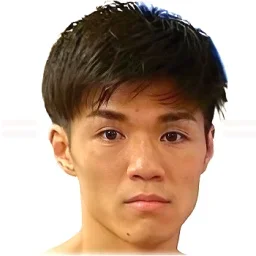

Fight Details
Fight
Mikito Nakano vs Ra’eese Aleem
Date & Time
Monday, November 24th, 2025
Championship
IBF World Featherweight Final Eliminator
Venue
Toyota Arena Tokyo
Toyota Arena Tokyo, Koto-Ku, Japan
How to Watch
Top Rank Classics
Promoter
Teiken Promotions
Fight Report
Ra’eese Aleem went into the lion’s den in Tokyo and walked out with both the win and a long-awaited ticket to a world title shot. Over twelve fast, nervy rounds at the Toyota Arena in Koto-ku, he outworked and outfoxed local favourite Mikito Nakano to take a unanimous decision in their IBF featherweight final eliminator, the judges returning tallies of 118–109, 116–111 and 115–112. It was the only result that ever really seemed likely once the pattern of the fight had settled, but it took a knockdown in the tenth and a cool head in the last to make it stick.
On paper this was a classic crossroads: Nakano, 14-0 with 13 knockouts, the southpaw puncher groomed carefully at home and now flung into a high-stakes eliminator on a big Prime Video card; Aleem, 22-1 with 12 stoppages, the 35-year-old American whose only defeat had come on the road against Sam Goodman and who has spent the last couple of years trying to remind people he belongs in the title conversation. He came representing Manny Pacquiao Promotions, carrying that “hard-luck contender” tag. By the time he left, there was nothing unlucky about his position as mandatory challenger at 126lbs.
Nakano began like a man intent on showing why he’d been favoured so heavily beforehand. In the opening round, he had the cleaner work, stepping in behind sharp, straight left hands and briefly pinning Aleem with one-twos that snapped the American’s head back. Aleem, taller on paper but fighting as the man on the outside, used the first three minutes as reconnaissance, circling, prodding with the jab and occasionally being beaten to the punch by Nakano’s quicker leads. It was the kind of quiet opener that tends to go to the home fighter, and there was no argument about who banked it.
From the second onward, the American started to look like himself. Rather than standing and trading leads, Aleem got his feet going, working side-to-side and punching on the move. He slid around Nakano’s front foot, dropped in jabs and right hands, and then took a half-step away before the counter could come back. The change of rhythm unsettled the Japanese southpaw. Where he had been setting his feet and firing clean in the first, he now found himself having to turn, reset and chase, with Aleem pecking away and then tying up when the distance closed too much for comfort. By the end of the third, you could see the shift: Nakano was still dangerous, but no longer dictating.
The middle of the fight became a tug-of-war for momentum rather than a procession. Nakano’s straighter shots were often the eye-catching punches in otherwise tight sessions, particularly when he managed to time Aleem’s exit and spear him with a left down the pipe in the back half of the seventh. But too often those successes came one at a time. Aleem would land a pair, clinch, move, and leave the local hero trudging after him. For several rounds, there was precious little to separate them beyond the judges’ taste: did they prefer Aleem’s constant motion and small clusters of scoring blows, or Nakano’s single, clean shots when he finally trapped his man long enough to let them go?
The eighth produced both the best and worst of Aleem’s night. He found a lovely rhythm early in the round, stepping in with his right hand and then wheeling off to his left, forcing Nakano to turn and follow. One of those rights landed flush and visibly shook the Japanese fighter, his head snapping back as the crowd drew a collective breath. But when they did finally come together at close quarters, their heads clashed and opened a cut above Aleem’s left eye. From then on, there was an extra note of urgency about his work: he knew that if the damage worsened, the doctors could be tempted into a conversation he didn’t want.
Nakano did his best to exploit whatever window that cut gave him. In the ninth, he improved his timing, catching Aleem repeatedly with the straight left as the American tried to step off after punching. The Japanese crowd, perhaps sobered by the way Takuma Inoue had turned things around against Tenshin Nasukawa in the main event, rose in the hope that their man could engineer a similar late surge. Nakano’s left hand found Aleem often enough to win him the round on many cards, but it didn’t quite turn the tide. The American stayed on his bike, punched in twos and threes, then bought himself a breather with a clinch when he had to.
The real break came late in the tenth. Sensing time was running short and fully aware of the situation on the cards, Nakano pressed harder, coming forward with more urgency and taking greater risks to land that fight-changing left. He did score with a couple, but in opening up, he gave Aleem the exact look he wanted. As the southpaw stepped in square, Aleem timed him with a right hand over the top that smashed home and sent Nakano sprawling to the canvas for the bout’s only knockdown. The Japanese fighter beat the count and rode out the remainder of the round, but in a fight whose margins had often been slender, that was the kind of swing that echoes loudly on the scorecards.
Aleem’s task in the eleventh and twelfth was simple on paper and anything but under the lights: don’t give it back. He stuck to what had brought him there. He circled, changed direction, dipped in with quick right hands, then smothered the replies. Nakano, now behind and fully aware of it, trudged forward with heavy legs and heavy intentions, but he was more often a step behind. At the start of the last session, the crowd tried to haul him forward, and midway through the twelfth, he finally landed another big left that briefly froze the American in his tracks. Aleem felt the weight of it, steadied himself, answered with a right of his own and then made sure, clinching and moving and doing just enough in the final exchanges to reach the bell upright.
When the totals were read – 118–109, 116–111 and 115–112 – there were a few raised eyebrows at the widest of them, but no serious mutiny. Aleem’s knockdown in the tenth and his superior control of distance, particularly from the second round onward, made him a clear and deserved winner. He improves to 23-1 with 12 knockouts and, more importantly, becomes a mandatory challenger to IBF featherweight champion Angelo Leo, who has his own business to attend to against Lerato Dlamini early next year. For a man who has been circling the title scene for years, this was the kind of away-win that cannot be ignored.
Nakano, now 14-1, has to go back to the drawing board with more questions than answers. The power that terrorised domestic and regional opposition did not vanish against world-class resistance. Still, his difficulty in pinning down a mobile, experienced opponent – and his tendency to let rounds slip by on single, isolated shots – will concern his handlers. Still, he went the full twelve in his first real step up, rose from a heavy knockdown and finished still trying to win the fight rather than merely survive. Those are not the signs of a ruined fighter, just one who has discovered how steep the climb is at the very top.
For Aleem, this Tokyo raid may well be remembered as the night when the “hard-luck” label was finally peeled off. On a card headlined by a glamour bantamweight clash, he slipped into town, dropped the house favourite, and walked away with the IBF’s golden ticket tucked in his glove bag. At featherweight, the queue for world honours is long and political. But after this, Ra’eese “The Beast” Aleem moves right to the front of it.
Comments (0)
Please log in to leave a comment
Loading comments...