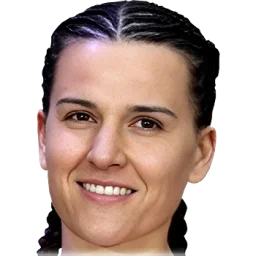

Fight Details
Fight
Chantelle Cameron vs Michaela Kotaskova
Date & Time
Sunday, April 5th, 2026
Championship
vacant WBO World Female Super Welterweight Title
Venue
Olympia London
Olympia London, Kensington, England
How to Watch
Sky Sports
Promoter
Most Valuable Promotions
Fight Report
The Olympia in Kensington has hosted boxing before, but not, in any era that the current participants would remember, a women's world title fight conducted over three-minute rounds. That distinction belonged to Sunday evening, when Chantelle Cameron and Michaela Kotaskova contested the vacant WBO super-welterweight championship across ten sessions of three minutes each, a format that Cameron had specifically campaigned for and which, upon its realisation, confirmed precisely what its advocates have always argued: that women's boxing at the highest level is not served by the reduced duration that has defined so many of its championship contests. Cameron won by unanimous decision, the judges returning scores of 100-90, 99-91 and 99-91, and added the WBO belt at 154 pounds to her previous undisputed championship at super-lightweight. She is now a two-weight world champion, the only professional fighter to have defeated Katie Taylor, and, at 34, is demonstrably in the second productive chapter of a remarkable career.
The biographical context is worth establishing because it informs the fight's significance. Cameron, from Northampton, turned professional in 2017 after beginning her martial arts journey at the age of ten. She built her reputation with forward pressure, relentless body work and a chin that has rarely been troubled. Her career reached its peak when she defeated Taylor for the undisputed super-lightweight title in 2022, a result that placed her alongside the great Irish champion in any serious conversation about women's boxing's finest practitioners. The rematch in 2023 went Taylor's way, and that defeat, the only one on Cameron's record, was what she had been working through and working past in the months leading to this fight. The interim period produced a WBC interim super-lightweight title defence against Elhem Mekhaled, followed by successful defences against Patricia Berghult and Jessica Camara, the latter at Madison Square Garden last July. None of those contests carried the weight of the Taylor fights, and the Kotaskova bout was a deliberate step upward in ambition if not quite in competitive level.
Kotaskova, thirty-four years old and born in the Czech Republic but based in Vienna, brought an unbeaten record into the contest, eleven wins from eleven outings with four stoppages and two draws, the record of a fighter whose progress through the professional ranks had been methodical and careful. She had been the WBF welterweight champion, a minor belt at a lower weight, and had moved up to super-welterweight specifically for this opportunity, much as Cameron had moved down. In the build-up, she had spoken with the kind of candour that is occasionally disarming in professional boxers who are about to face someone capable of doing them considerable damage. She named Cameron as one of the five women in the world she most admired and explicitly cited the victory over Taylor as the reason. That admitted admiration did not prevent her from also suggesting that the longer three-minute rounds might expose Cameron, that her own size and reach at the weight class would give her advantages, and that Cameron's transition upward might create complications. In the ring, those predictions proved more ambitious than accurate.
From the opening bell, Cameron was precisely what she has always been, which is a fighter who arrives at the centre of the ring with purposeful authority and sets about making the contest physically uncomfortable for her opponent. The body attack has long been the foundation of Cameron's work, and it was deployed against Kotaskova from the first exchanges. The Czech held a reach advantage and used it to land jabs through the early rounds, both fighters finding their range and testing each other's defences, Kotaskova moving to use her height and Cameron pressing forward beneath it to deliver to the midsection. It was in those early rounds that the question Kotaskova had raised about the three-minute format found its answer. Cameron's fitness was not in question. Her work rate across ten rounds of three minutes was that of a fighter who had prepared specifically for the duration and who clearly welcomed rather than feared the additional time.
By the middle rounds, the pattern had consolidated. Cameron was backing Kotaskova toward the ropes with increasing regularity, landing body shots that visibly affected the Austrian, the challenger's gloves dropping instinctively to her midriff when Cameron found the target. Kotaskova responded with her own combinations and showed throughout the night that she was neither passive nor without skill, but the gap between her output and Cameron's was telling. The Northampton fighter mixed her attacks purposefully, working the body to set up the head shots that earned scoring on all three judges' cards, and there were moments in the championship rounds when Kotaskova appeared genuinely shaky rather than simply tired, a meaningful distinction the wider scorecards acknowledged.
The later rounds produced some of the night's most physically engaging action. Kotaskova arrived at the final round visibly marked, her nose and the area around her eyes bearing the evidence of the accumulated work Cameron had done throughout. She threw her combinations in the tenth, both women trading in the final minute in the way that a ten-round contest fought over proper durations tends to produce when neither fighter is prepared to concede the closing moments. Cameron landed clean to the body and followed with a left hook to the head in the closing thirty seconds that underlined the consistent quality of her work across the entire contest. The bell, when it came, confirmed what the watching crowd at the Olympia had known since the middle rounds.
The historical dimension of the fight, being the first women's world title contest on British soil conducted over three-minute rounds, was not lost on Cameron in the ring afterwards. "First woman to become undisputed in the UK and now the first woman to fight three-minute rounds for a world title," she said. The observation was not self-congratulatory so much as factual, and it placed the evening's result alongside other specific landmarks in a career that has built them with some regularity. For the record, Cameron moves to 22 wins, one defeat and eight stoppages. Kotaskova falls to 11-1-4, her unbeaten record ended by the most credible opponent she has faced so far.
The post-fight atmosphere in the ring added a further dimension to the evening. Mikaela Mayer, the accomplished American who has operated at both super-featherweight and super-lightweight during a distinguished career, joined Cameron's post-fight interview, and the two declared their intention to fight each other next. Whether those declarations translate into a signed contract is a matter of negotiation and promotion, but as ringside moments go, it gave the assembled crowd at the Olympia something to anticipate and gave the women's super-welterweight division a potential fight of genuine competitive interest. Cameron has also spoken, before and presumably after the fight, of her longer-term intention to move back down to welterweight and win a world title in a third weight class. That objective, were it to be achieved, would place her firmly in the company of the most decorated British fighters of any generation or gender.

Gym Rat Fight Assessment
If we presume to have a pound-for-pound rankings list for women’s boxing, then I would propose that Chantelle Cameron would be in the top three of that category. The only woman to beat the great Katie Taylor and now the winner of a second divisional belt. Her proposed match-up with Mikaela Mayer will come close to putting her back on the level when she had her two fights against the great Irish woman. She has also stated that she will move down in weight to welterweight to pick up a third world title. Who’s to say she can't, looking at her performance against Kotaskova? As you can tell, I am a bit of a fan of the Northampton woman’s career, and I do believe she is quite capable of not only beating Mayer but of winning a world title at welterweight. And who knows, maybe that fight could come against Sandy Ryan in an all-British matchup that would sell out most arenas. As always I would like to give credit to Michaela Kotaskova, the Vienna-based Czechia fighter who came and gave it everything she had. She took some serious damage from Cameron I never gave up trying. But the 34-year-old Cameron moves forward, and for me, she is still getting better. She's an improving fighter who is going to earn her place as an all-time great of women's boxing when she eventually calls it a day.
Comments (0)
Please log in to leave a comment
Loading comments...