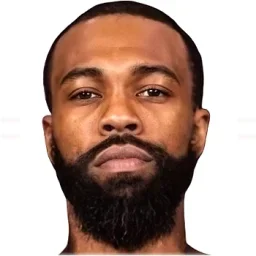
Gary Russell Jr
"Mr"
- Age: 37 yrs
- Nationality: USA

- Born: 5th June 1988
- Place of birth: Washington, District of Columbia, USA
- Residence: Capitol Heights, Maryland, USA
- Division: Featherweight
- Height: 5ft 5"
- Reach: 64.2"
- Reach Ratio: 0.99
- Stance: Southpaw
- Debut: 16th Jan 2009
- Status: Active Professional Boxer
-
Record:

Gary Russell Jr Boxing Statistics
Gary Russell Jr Biography
Gary Russell Jr. is a southpaw featherweight born on June 5, 1988, in Washington, D.C., who boxed out of Capitol Heights, Maryland and became one of the most technically polished American fighters of his era. Listed at 5 feet 5 inches with a 64.2-inch reach, he built a style around quick feet, fast hands and a disciplined right-jab lead that set up sharp counters from his left side. His background is inseparable from a family steeped in the sport: five brothers boxed, including fellow professionals, and the household culture of gym work and tournaments formed an early foundation for his ring manner. As an amateur, he assembled a résumé that foretold his quality. He won the 2004 Junior Olympics, captured both the U.S. Nationals and National Golden Gloves as a teenager in 2005—an extremely rare double—and was named USA Boxing’s Athlete of the Year that season. He added another national title and a bronze medal at the World Championships before qualifying for the 2008 Olympic Games, only to be forced out on the eve of competition after a dehydration episode. The setback closed one chapter but accelerated another: he turned professional the following January, intent on translating an elite point-scoring style into the more punishing terms of the paid ranks.
Russell’s professional debut came on January 16, 2009, against Antonio Reyes at the Million Dollar Elm Casino in Tulsa, Oklahoma, and ended in a third-round stoppage scheduled for four. The first year was busy and emphatic, a sequence of short fights and early endings designed to keep a talented southpaw under the lights and on television slots. He beat John Wampash over four rounds at the BankAtlantic Center in Sunrise that February, outpointed Alvaro Muro over four at the Chumash Casino in May, stopped Jason Jones in a round at Buffalo Bill’s Star Arena in August, decisioned Noe Lopez over four in Laredo in October, and closed December with a third-round stoppage of Rodrigo Romero in Hinckley. In 2010 alone he rattled off eight more wins, mostly first- or second-round finishes: David Orosco Cano (TKO 1, Tunica), Jairo Delgado (KO 1, Cleveland), Carlos Diaz (KO 1, Memphis), Rodrigo Aranda (KO 2, Los Angeles), former champion Mauricio Pastrana (TKO 1, Los Angeles), Willie Villanueva (KO 1, Tunica), Guadalupe De Leon (six-round decision in Los Angeles), and opened 2011 by beating Feider Viloria on a technical decision after seven rounds in San Diego. Even in this developmental phase, the pattern was clear: quick starts, surgical straight lefts, and a preference for mid-range control rather than brawling exchanges.
The step-up period that followed kept him active while nudging the competition level higher. In 2011, he beat Adolfo Landeros (six-round decision, San Francisco), Antonio Meza (KO 4, Hidalgo), Eric Estrada (eight-round decision, Las Vegas) and Leonilo Miranda (eight-round decision, Biloxi) before stopping veteran Heriberto Ruiz in a single round at Cincinnati’s U.S. Bank Arena. In 2012, he shifted to Indio, California, for two televised showcases at the Fantasy Springs Casino—Christopher Perez halted in three rounds and Roberto Castañeda was removed in the third—then moved through 2013 with ten-round decision wins over Vyacheslav Gusev at The Joint in Las Vegas and Juan Ruiz back in Indio.
By early 2014, he was 24-0 and, after a stay-busy knockout of José Tamayo González at Barclays Centre in Brooklyn, received a bout for the vacant WBO featherweight title against Vasyl Lomachenko at the StubHub Centre in Carson, California, on June 21, 2014. It was a high-skill, tactical fight decided on narrow margins; Lomachenko took a majority decision, handing Russell his first professional loss and underscoring how thin the separation can be at the world-class level. Russell answered six months later with a ten-round decision over Christopher Martin at Little Creek Casino Resort, the reset that positioned him for a second title opportunity.
That second shot came on March 28, 2015, at the Pearl at the Palms in Las Vegas, where Russell ripped the WBC featherweight belt from seasoned puncher Jhonny González by fourth-round stoppage. It was the definitive crowning performance of his career, built on speed and accuracy that repeatedly broke up the champion’s offence. After that, his title run settled into a rhythm of one defence per year—a cadence that drew comment but also gave each appearance a spotlight feel. He stopped Patrick Hyland in two rounds at Foxwoods in April 2016; returned in May 2017 at the new MGM National Harbor in Oxon Hill to halt Oscar Escandón in seven; and a year later, at the same venue, he outpointed unbeaten Joseph “JoJo” Diaz Jr. over twelve. In May 2019, he faced former IBF champion Kiko Martínez at Barclays Centre and won via a fifth-round technical stoppage due to cuts. The fifth defence took place in February 2020 at the PPL Centre in Allentown, where he boxed with measured economy to outpoint Olympic silver medalist Tugstsogt Nyambayar over twelve rounds. Each of these defences highlighted core elements of his craft: a southpaw jab that could score or blind, a straight left that punished over-commitment, and lateral steps that reset exchanges on his terms. Against forward-marching challengers, he created space early and then capitalised with sudden counters once their rhythm grew predictable.
The title reign ended on January 22, 2022, at the Borgata Hotel Casino in Atlantic City when Russell lost a majority decision to unbeaten Mark Magsayo. He boxed with a compromised right shoulder, which reduced his output and forced him to lean even more heavily on timing and single-shot counters. Close rounds slipped away against a busier opponent, and the belt changed hands after nearly seven years in Russell’s possession. A long layoff followed. He returned on July 19, 2025, at the MGM Grand Garden Arena in Las Vegas and stopped Hugo Castañeda with a body shot 26 seconds into the tenth and final round of their contest. This result reaffirmed the precision and punch selection that had been hallmarks since his earliest professional outings.
Russell is a ring-centre southpaw who establishes pace rather than chasing it. The right jab is both a rangefinder and a scoring instrument, thrown from a low-set lead hand that snaps up and forward; the straight left splits guards when opponents square or reach; and the right hook appears as a short, punctuating shot at the end of exits. He seldom smothers his own work, preferring clean, single-shot scoring in the first half of fights and measured, two-and-three-punch sequences once he has fixed an opponent’s rhythm. Many of his stoppages, especially during the climb, came from precision and timing rather than extended flurries—first- and second-round endings where a straight left arrived before the other man had settled. Against seasoned operators, he relied more on footwork and shot discipline. That was evident in how he blunted Diaz Jr.’s pressure with jabs and pivots, outmanoeuvred Escandón when the Colombian tried to crowd him, and opened Martínez with counters that cut short the Spaniard’s momentum. When volume fighters pushed him hard behind a high guard, as with Nyambayar, Russell stepped off to the angle, pecked with the jab and scored with single lefts, trusting the judges to reward clean work. The vulnerabilities were also consistent: long gaps between fights sometimes meant slower starts, and when injury limited his right hand, his punch count could dip enough to create opportunities for busier opponents. Yet the Castañeda finish—arriving late in a scheduled ten—illustrated that, even after years at the top level, his sense of when to go downstairs and finish remained acute.
Gary Russell Jr’s career is defined less by volume of outings than by the quality of execution whenever he did step through the ropes. The early ledger shows a fighter learning how to translate amateur neatness into professional spite; the middle years show a steady diet of durable opponents and minor title tests that readied him for elite company; and the championship period distils his identity as a precise, economical southpaw who preferred to keep fights in the lane of his choosing.
Tale of the Tape
| Attribute | Stats | vs Division Avg |
|---|---|---|
| Height | 164cm cm | -5 cm |
| Reach | 163cm cm | -8 cm |
Frequently Asked Questions About Gary Russell Jr
What division does Gary Russell Jr fight in?
Where is Gary Russell Jr from?
How old is Gary Russell Jr?
What boxing stance does Gary Russell Jr fight out of?
When did Gary Russell Jr begin their professional boxing career?
Past Fights
Gary Russell Jr vs Kiko Martinez
May 18, 2019